


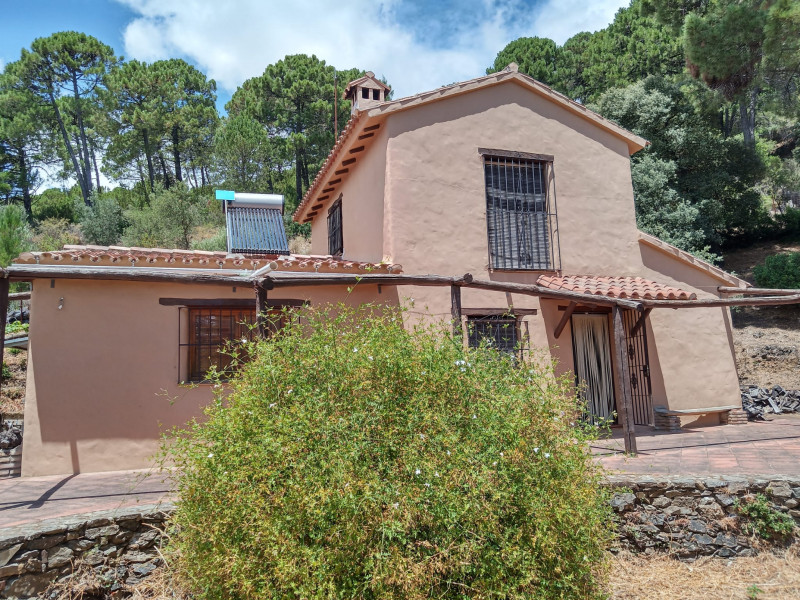
Something shifts when you visit an off-grid property in Andalucía for the first time. The absence of hum. The night sky unspoiled by streetlights. Water that arrives from your own well, electricity generated by the sun overhead. It's a different rhythm entirely, and for a growing number of relocators, it's exactly what they're looking for.
Off-grid living isn't just a trend driven by environmental concerns or energy costs, though both play their part. It's about reclaiming a degree of control in an uncertain world. It's about waking to birdsong instead of traffic, about knowing where your resources come from, and about building a life that feels less fragile, more rooted.
Why Andalucía Works for Off-Grid Living
Not every region lends itself to self-sufficiency, but Andalucía has the fundamentals in place. The climate is generous. With over 300 days of sunshine annually, solar panels aren't a compromise here—they're genuinely effective. Winter heating demands are modest compared to northern Europe, and summer heat, while intense, can be managed with traditional architecture and thoughtful design.
Water is the more delicate consideration. Rainfall varies significantly across the region, and securing a reliable water source—whether through a legal well, spring access, or rainwater harvesting—is non-negotiable. Properties in the Serranía de Ronda, the Genal Valley, and parts of the Sierra de Cádiz tend to have better water availability than the drier eastern provinces.
Land is still relatively affordable in rural Andalucía, particularly when you move away from coastal areas. You can find substantial plots with existing structures that provide a foundation for conversion, or bare land where you can build from scratch, subject to planning permissions.
What Off-Grid Actually Means Here
True off-grid properties have no connection to mains utilities—no electricity grid, no water supply, no sewerage system. Everything is self-contained. Solar panels with battery storage handle electricity. Water comes from wells, springs, or collection systems. Waste is managed through septic tanks or composting systems. Heating might come from wood burners, with logs sourced from your own land or locally.
But there's a spectrum. Some properties are partially off-grid—perhaps connected to electricity but with their own water supply. Others have grid access available but owners choose to remain independent. The term covers a range of setups, and it's worth being precise about what you're actually looking for.
Technology has made off-grid living far more comfortable than it was even a decade ago. Modern solar systems with lithium batteries can power a conventional household, including appliances and air conditioning. LED lighting uses a fraction of the energy of older bulbs. Satellite internet has improved dramatically, making remote work feasible from even the most isolated properties.
The Practical Realities
Off-grid living requires a different mindset. You become acutely aware of consumption—how much water you use, how much electricity your fridge draws, whether running the washing machine now is the best use of stored solar energy. It's not restrictive so much as intentional. You make choices rather than simply consuming without thought.
Maintenance becomes part of life. Solar panels need occasional cleaning. Batteries have finite lifespans. Wells may need servicing. Septic systems require periodic emptying. You either develop a working knowledge of your systems or establish relationships with local technicians who can help. Self-reliance doesn't mean doing everything yourself—it means knowing your systems well enough to manage them effectively.
Access matters more than you might initially think. A property reached by a rough track becomes challenging when you need to bring in a water tanker during a dry spell, or when you're carrying in building materials. Some isolation is part of the appeal, but you need to balance that against practicality.
Where to Look
The Serranía de Ronda remains one of the most appealing areas for off-grid living. Villages in the Genal Valley like Benalauría offer access to community while surrounding countryside provides opportunities for rural properties. The landscape is green, water is generally available, and there's an established community of foreigners who've made similar moves.
Further west, areas around El Gastor in Cádiz offer dramatic scenery and lower property prices, though you're further from major airports and amenities. The white villages of the Sierra de Cádiz have a particular beauty, and the area attracts people seeking quiet and space.
Even closer to the coast, it's possible to find off-grid or semi-off-grid properties if you're willing to look beyond the obvious locations. The key is working with agents who understand rural property and can navigate the specific challenges of buying land or homes without mains connections.
Legal Considerations
Spain's planning laws are regional and can be complex, particularly around rural construction. Not all land can be built on. Some existing structures may lack proper paperwork. Wells need to be legal and registered. It's critical to work with a lawyer experienced in rural Andalusian property who can verify that what you're buying is legitimate and that your plans for the property are actually permitted.
The paperwork matters. An illegal build can result in demolition orders, fines, or simply an inability to sell in the future. Properties described as "rustic" or on "non-buildable land" may have limitations on what improvements you can make. Get clarity before you commit.
Is It Right for You?
Off-grid living suits people who are comfortable with a degree of physical engagement with their environment. If the idea of troubleshooting a water pump or monitoring battery levels feels burdensome rather than interesting, it may not be your path. But if you're energised by the prospect of a more hands-on life, it can be deeply satisfying.
It works well for remote workers who value peace over proximity to urban centres. It appeals to people who want land—for permaculture projects, for animals, for rewilding, or simply for privacy. It attracts those who've grown tired of monthly utility bills and the vulnerability of depending entirely on external systems.
It's worth spending time in the area before buying. Rent a rural property for a few months. Experience the reality of driving 20 minutes to the nearest shop, or managing with limited water during a dry summer. Understand what winter looks like when you're responsible for keeping yourself warm. The romantic vision and the daily reality aren't always aligned.
The Shift Happening Now
Interest in off-grid property in Andalucía has grown noticeably in recent years. Rising energy costs have made self-sufficiency more economically attractive. The experience of lockdowns prompted many to reconsider what security actually means, shifting focus from proximity to services toward greater autonomy and space.
Climate awareness plays a role too. Living off-grid often means a smaller environmental footprint—less consumption, more connection to natural cycles, a clearer view of how your daily choices affect the world around you.
But perhaps the deeper pull is about quality of life. There's something restorative about land, about silence, about systems you can understand and control. The appeal isn't about rejecting modernity entirely—most off-gridders use the internet, drive cars, and enjoy modern comforts. It's about choosing which aspects of modern life serve you and which you're happier without.
Andalucía's combination of climate, landscape, affordability, and infrastructure makes it one of Europe's most practical locations for this way of living. The sun reliably powers your home. The land still exists at a human scale. The bureaucracy, while present, is navigable with proper guidance. And once you're established, the life you build can be remarkably rich—connected to place, to season, to the fundamental elements that sustain you.


