


Does a Catastro Certificate Mean My House Is Legal?
One of the biggest misconceptions we encounter when helping buyers purchase rural property in Andalucía is the belief that if a building appears in the Catastro, it must be legal.
Unfortunately, this is not true.
Every year we meet buyers who have been told:
“Don’t worry – it’s on the Catastro.”
While this statement may be factually correct, it tells us very little about whether the property complies with Spanish planning legislation.
Understanding the difference could save you tens of thousands of euros.
What is the Catastro?
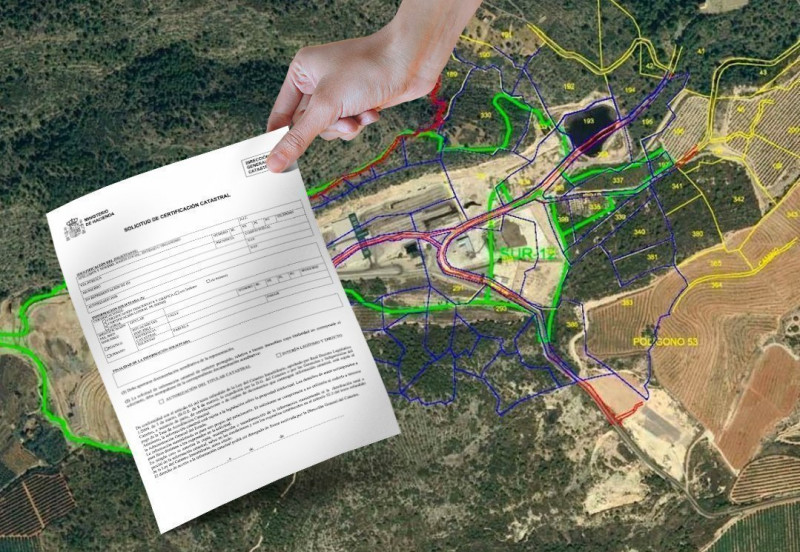
The Catastro (Spanish Cadastral Register) is a government database used primarily for taxation purposes.
It records:
- Land boundaries
- Building footprints
- Floor areas
- Property use
- Construction dates (where known)
- Ownership references for tax administration
Its purpose is to calculate taxes—not to certify whether a building was legally constructed.
Think of it as a map and tax register rather than a planning register.
Why People Get Confused
Many owners assume that because their extension or swimming pool appears on the Catastro, the local council must have approved it.
In reality, the Catastro often updates its records using:
- Aerial photography
- Satellite imagery
- Owner declarations
- Survey information
- Data supplied by municipalities
None of these automatically verifies that planning permission was ever granted.
A Real Example
Imagine a country house built in 1985.
In 2008 the owner adds:
- A new bedroom
- A swimming pool
- A covered terrace
Ten years later, the Catastro updates its aerial photography and includes all these new structures.
The buildings now appear on official plans.
However…
If no building licence was ever obtained, those works may still be unauthorised from a planning perspective.
The Catastro has simply recorded what exists physically.
It has not approved the construction.
What Actually Proves Legality?
A property’s legal status is established through planning documentation, such as:
- Building licences
- Approved architectural projects
- Completion certificates
- Occupation licences (where applicable)
- Certificates of Antiquity
- AFO or legalisation procedures where appropriate
These documents demonstrate that the development complied—or has subsequently been regularised—in accordance with Andalusian planning legislation.
Why This Matters When Buying
If unauthorised works exist, buyers may face:
- Delays obtaining finance
- Difficulties carrying out renovations
- Problems securing future planning permissions
- Unexpected legalisation costs
- Reduced resale value
None of these risks can be identified simply by looking at the Catastro.
Our Advice
Never assume that registration equals legality.
Before purchasing a rural property, ensure that the planning history, Land Registry, Catastro and the physical building all tell the same story.
A professional technical review can identify discrepancies before they become expensive surprises.
Buying a country property should be exciting—not uncertain. Understanding what the Catastro can and cannot tell you is the first step towards making an informed investment.


